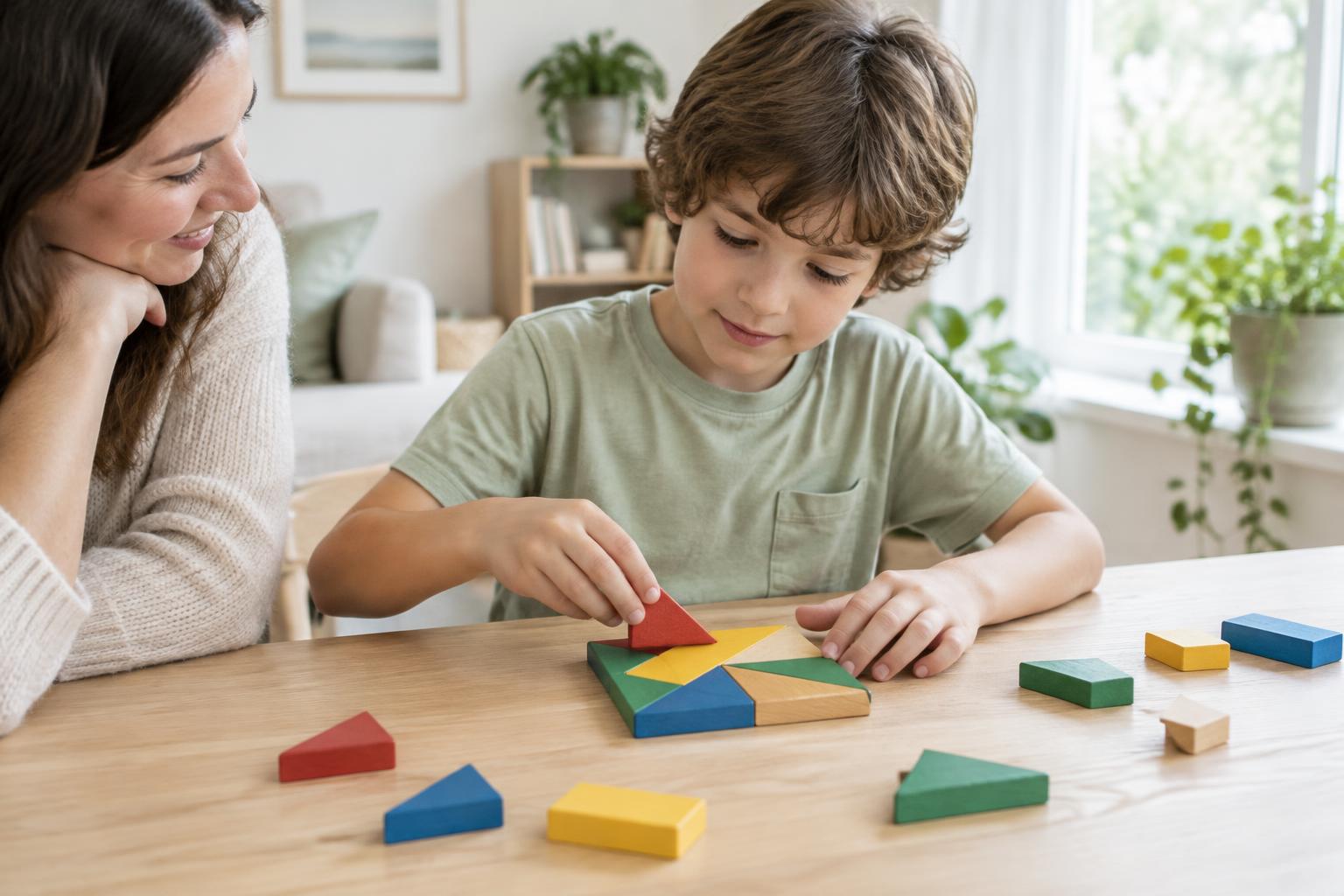
Evaluating a child's mental development and problem-solving abilities can give parents unique insights into how their young ones learn and process information. Designed specifically for ages 4 through 18, modern digital tools make exploring cognitive reasoning at home accessible, visual, and completely free of registration hurdles or hidden costs.
Featuring engaging visual puzzles, sequence completion tasks, and logical deduction challenges, these online assessments take only 6 to 10 minutes. Children receive immediate feedback without needing to create an account or submit personal information.
However, parents often wonder: How effective are online evaluations? How is a child's intellectual capacity measured, and what makes a web-based test worth trying? Here is everything you need to know.
Do Cognitive Assessments for Kids Really Work?
Yes, scientifically developed intelligence assessments offer valuable insights into a young person's critical thinking capabilities. For decades, educators, clinical researchers, and psychologists have relied on standardized scoring metrics to measure spatial reasoning, memory retention, and abstract thinking.
In formal diagnostic environments, clinical instruments like the Wechsler Intelligence Scale for Children (WISC-V) and the Stanford-Binet Intelligence Scales are administered under controlled conditions by certified professionals.
While digital tools cannot substitute for a clinical diagnosis, an age-appropriate iq test for children serves as an excellent informal screening tool. It helps parents identify specific analytical strengths—such as pattern detection or visual logic—giving them a helpful baseline of their child's cognitive profile.
How Is Intelligence Evaluated in Growing Minds?
Unlike standard classroom quizzes that test memorized facts or reading retention, cognitive tests measure raw problem-solving fluid intelligence. Questions are designed to evaluate how effectively a child processes new information and resolves unfamiliar logic puzzles.
Primary areas assessed typically include:
- Pattern Detection: Analyzing complex visual sequences to predict subsequent steps.
- Logical Deductions: Understanding relationship networks across shapes, symbols, and numbers.
- Visual-Spatial Reasoning: Mentally manipulating 2D and 3D shapes to determine alignment.
- Quantitative Logic: Identifying numerical rules and relative values without complex arithmetic.
- Abstract Problem-Solving: Applying generalized rules to decode novel challenges.
Standardized scores compare a child's accuracy against normative peer groups of the exact same age. Across standard scoring scales, 100 represents average performance, with approximately 68% of test-takers scoring between 85 and 115.
What Is the Best Free At-Home IQ Screening Tool?
For families seeking a simple, accurate, and completely free option at home, KidsIQTest.org stands out as a leading resource for informal cognitive testing.
Rather than using uniform questions for all age brackets, KidsIQTest.org features six distinct assessments tailored to key developmental stages:
- IQ Test for Children Ages 4–5
- IQ Test for Children Ages 6–7
- IQ Test for Children Ages 8–9
- IQ Test for Pre-Teens Ages 10–11
- IQ Test for Early Teens Ages 12–14
- IQ Test for Teens Ages 15–18
Why Choose KidsIQTest.org?
Several features make KidsIQTest.org an ideal choice for parents, teachers, and home-educators:
1. 100% Free Access: Kids can take the assessment and review full results without subscriptions, fee barriers, or email sign-ups.
2. Stage-Specific Content: Questions adjust based on developmental readiness. Younger children solve intuitive picture puzzles, while teenagers encounter complex relational logic.
3. Fast Feedback: Tests take 6 to 10 minutes on average, delivering instant performance summaries immediately upon completion.
4. Four Core Skill Categories: Evaluates pattern recognition, visual puzzles, spatial logic, and quantitative sense to highlight specific mental strengths.
5. Contextualized Results: Provides an estimated score range and breakdown per section rather than an isolated number, helping parents understand performance context.
6. Stress-Free Design: Preschool assessments require zero reading skills and carry no timer pressure, ensuring a positive experience for early learners.
Understanding the Scientific Accuracy of Online Testing
While online screening offers helpful indications of reasoning abilities, clinical validity requires standardized administration by a trained professional. The results from digital platforms like KidsIQTest.org should be viewed as preliminary estimates rather than official diagnostic scores.
Additionally, a child's score can vary depending on external factors like fatigue, focus level, test anxiety, or prior exposure to puzzle games. Results should always be interpreted thoughtfully.
For formal choices regarding gifted placement programs, special education support, or clinical diagnoses, families should consult an educational psychologist.
Conclusion: Discover Your Child's Analytical Strengths
Cognitive evaluations offer a fascinating window into how young minds learn, adapt, and process abstract information. Although web-based tools do not replace formal evaluations, they offer an accessible, low-pressure introduction to critical thinking skills.
With stage-specific modules, instant free reports, no registration rules, and engaging questions, KidsIQTest.org is an exceptional platform for curious families.
Ready to begin? Take the Free IQ Test for Children and discover your child's reasoning profile today!